
The Behaviour Plan Just Isn’t Working … What Can We Do?
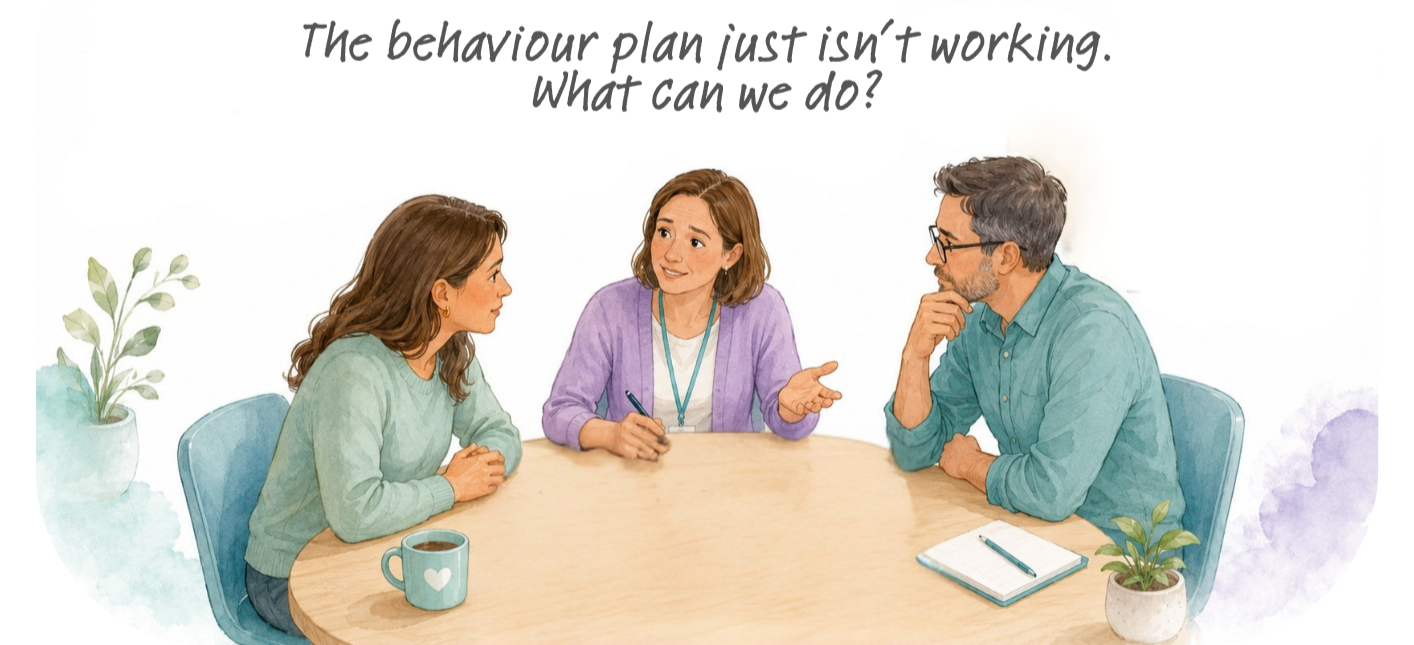
The frustrating reality is that behaviour plans often fail
Schools and families often come to us when behaviour has become a cause for concern. A child may be running from the classroom, refusing to complete work, yelling, hiding, shutting down, arguing, disrupting the group or becoming distressed at particular points in the school day. By the time a behaviour plan is suggested, everyone is often tired, worried and looking for something clear to put in place.
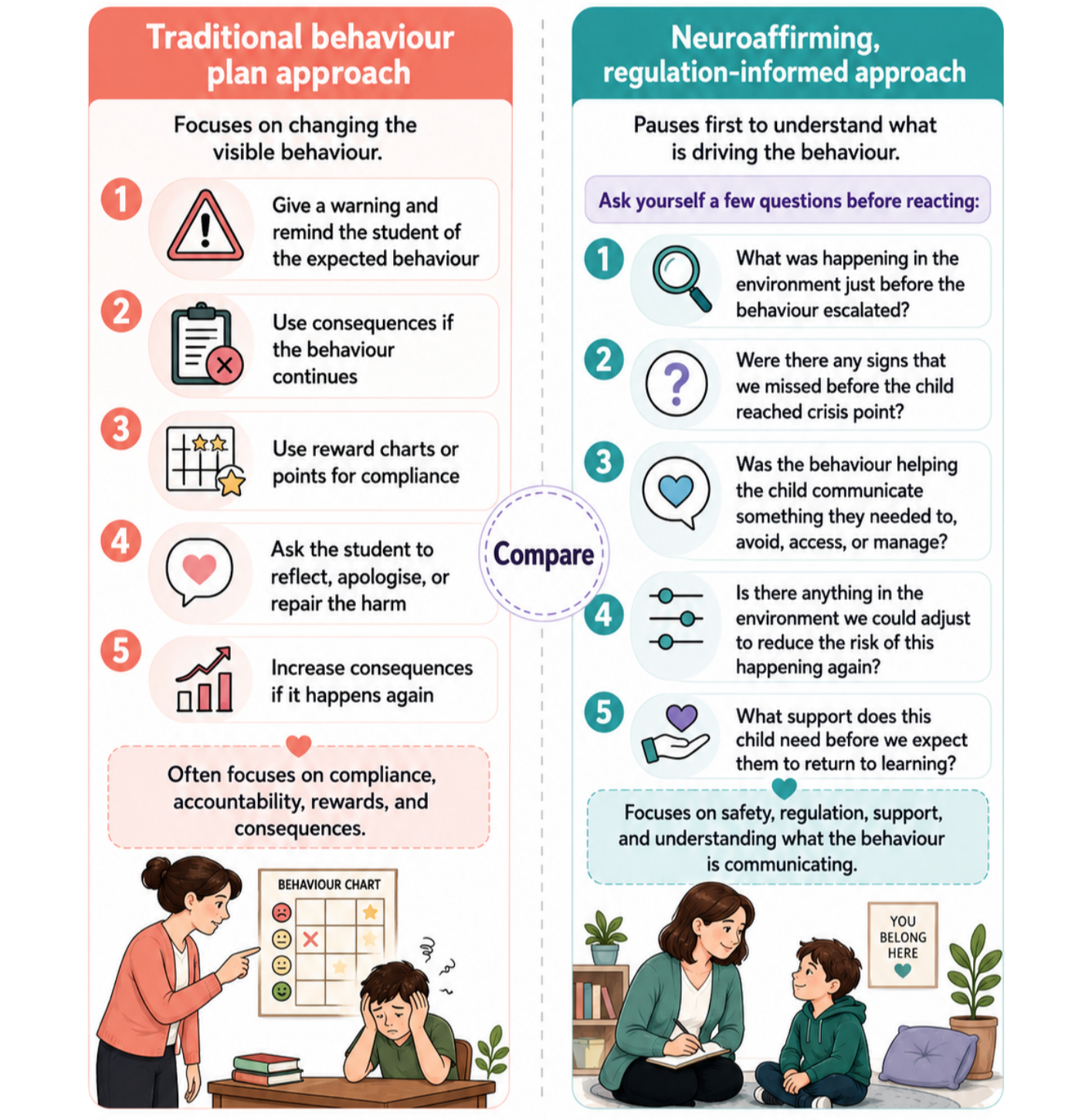
The difficulty is that many behaviour plans are reactive, beginning at the point where the behaviour has already become an issue. They describe what adults should do when a child refuses, runs, hits, hides or melts down, but pay much less attention to what happened before the child reached that point. A plan that begins with the behaviour is usually starting in the in wrong place.
Behaviour is communication
This doesn’t mean we just ignore behaviours that pose safety risks, or negatively impact others. We examine them them to help to inform our understanding of how a child’s nervous system responds to the world around them.
When behaviours triggered by a dysregulated nervous system are treated as intentional, or oppositional, and the response is punishment or consequences, the message the behaviour is trying to get across gets missed.
Increasing consequences, insisting on compliance, or trying to reason with a child who is too dysregulated to process what is being said, is a futile exercise in that moment. A better response is to make the environment safe, and observe what is really going on.
A different approach may be more effective
Ask yourself a few questions before reacting:
What was happening in the environment just before the behaviour escalated?
Were there any signs that we missed before the child reached crisis point?
Was the behaviour helping the child communicate something they needed to, avoid, access, or manage?
Is there anything in the environment we could adjust to reduce the risk of this happening again?
What support does this child need before we expect them to return to learning?
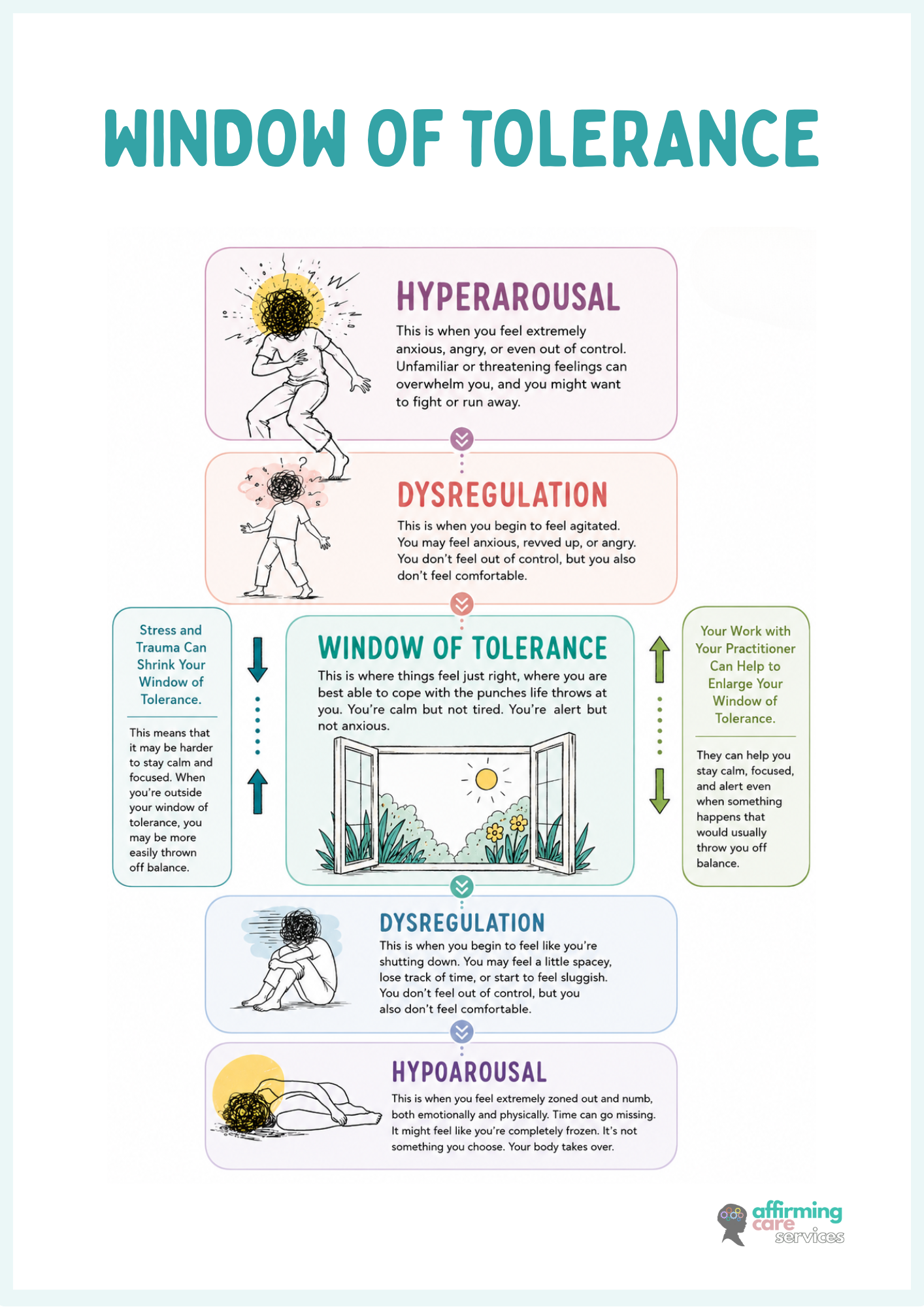
Understanding The Window of Tolerance
Nought to 100 is Rarely the Case. Parents often tell us, “They only see the behaviour. They don’t know what led up to it.” Teachers may also tell us, “It seems to come out of nowhere.” In busy classrooms, both experiences can be true. The most visible behaviour attracts the most attention, while the early signs of distress can be easy to miss.
The window of tolerance is a useful way to understand what may be happening underneath behaviour. When a child is within their window of tolerance, they are more able to learn, listen, communicate, problem-solve and respond to support. They may still need help, but their nervous system is organised enough for connection and learning to remain possible.
When stress pushes a child outside that window, their responses can become more instinctive. This may look like fight, flight, freeze, fawn, shutdown or meltdown. At that point, the child is often not making a thoughtful decision to be difficult. Their nervous system has moved into survival mode.
This is why behaviour plans that rely heavily on reminders, warnings, rewards or consequences may not work for every child. Those strategies assume the child can pause, reflect and choose a different response in the moment. For many neurodivergent children, especially those experiencing anxiety, sensory overload, demand sensitivity or repeated stress, those skills may not be available once distress has escalated.
Looking at What’s Happening Around the Behaviour
A more useful plan asks what is happening before the behaviour. Was there a transition, a change in routine, a noisy room, a social misunderstanding, a public correction, a difficult task, hunger, fatigue, pain or a build-up of smaller stressors across the day?
Many children show signs of distress long before adults are called to respond. You may notice them withdraw, become more rigid or controlling. They may start acting silly, or more argumentative. There may be an increase in clinginess, or they may become more dependent on a particular adult. Other things you might notice include: becoming unable to initiate tasks, leaving their seat, complaining of feeling sick, or becoming preoccupied with rules and fairness.
These signs matter because they tell us when the child may be moving closer to the edge of their window of tolerance. If adults can notice earlier, they have more options.
Environmental Factors
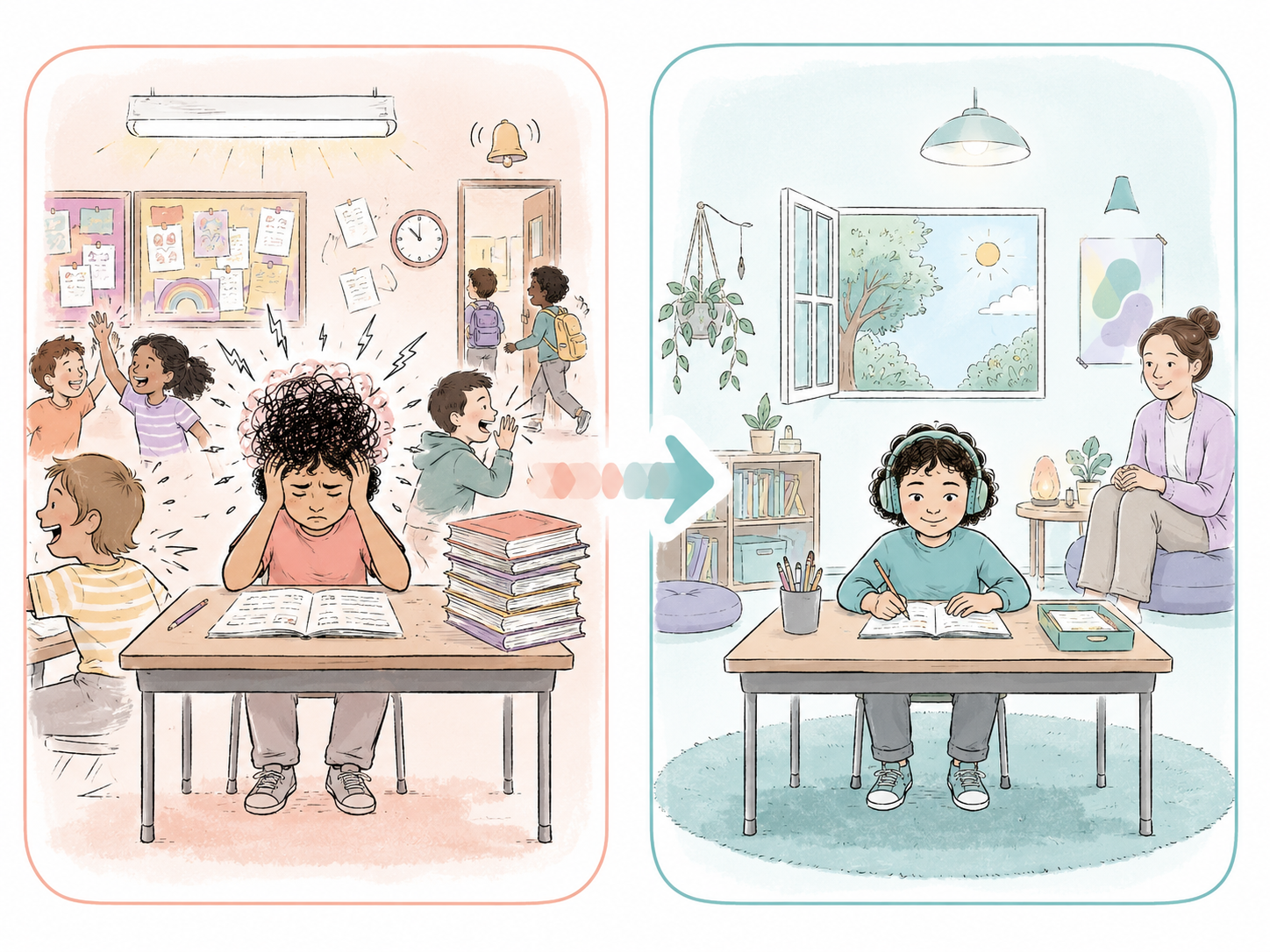
When schools ask, “How do we change this behaviour?” it can be more useful to begin with, “What is happening in the environment to push the child outside their window of tolerance?”
The environment includes more than the physical classroom. It includes noise, lighting, seating, transitions, pace, predictability, language, peer dynamics, adult tone, task design, emotional safety, access to food and movement, and the child’s previous experiences of being supported or misunderstood.
A child may manage well in one classroom and struggle in another because the demands are different. One space may be quieter, more predictable or more relationally safe. One teacher may speak less, offer more processing time, or offer feedback privately rather than in front of other students. One subject may require more handwriting, group work, uncertainty or performance pressure.
When adults look carefully at the environmental, social, sensory and relational factors around behaviour, the pattern often begins to make more sense.
For some children, the most important information is not what adults should do during a meltdown. It is what adults should have noticed twenty minutes earlier.

Neuroaffirming Care Plans
At ACS, we use Neuroaffirming Care Plans, or NCPs, to help schools move beyond a behaviour-only lens. An NCP is designed to build shared understanding of a child’s regulation profile: what helps them stay within their window of tolerance, what early signs suggest they are becoming overwhelmed, and what adults can do before distress escalates.
This kind of planning is especially important for children whose behaviour is easily misunderstood. Instead of asking staff to wait until the child is already in crisis, an NCP helps adults notice the earlier signs and respond in ways that reduce pressure, preserve dignity and support regulation.
Need Help to Create a School Environment that Reduces Factors That Lead to Tricky Behaviour? We Can Help.
We support schools and families through consultation, training and professional development that help staff understand behaviour as communication and build practical, regulation-informed support for children in school environments using our signature Neuroaffirming Care Plans.
✉️ admin@affirmingcare.com.au
📞 0423 888 530
